Shipping container delivery: what the truck needs
How a container comes off the truck, how much room the driver needs, and how to prepare the ground so it goes down level the first time.
- About 75 ft for a 20 ft
- About 110 ft for a 40 ft
- A container number on every order
- Photos before delivery, on request
- Delivered to your site
- Se habla español
How a container comes off the truck
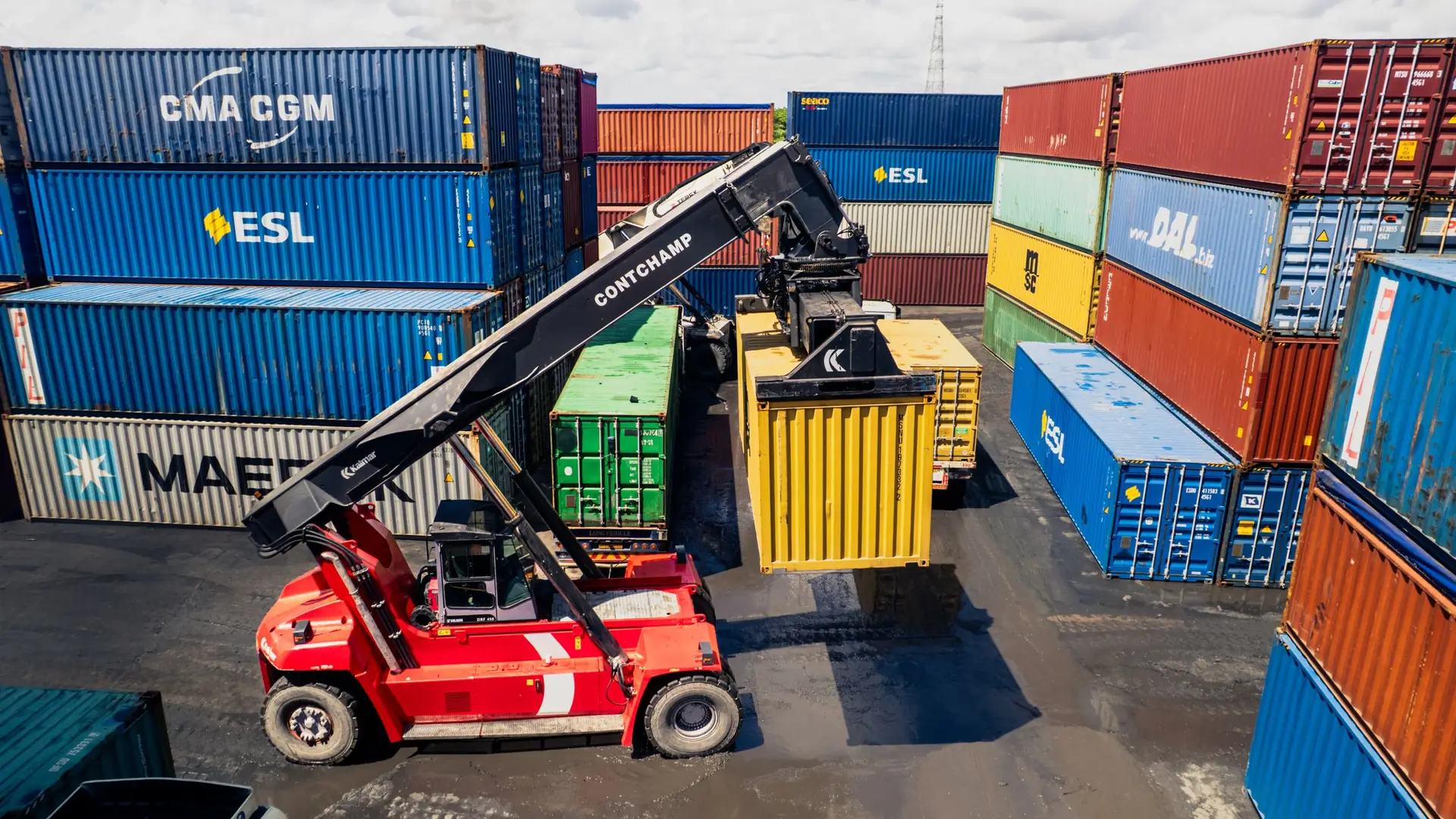
Most containers are delivered on a tilt bed truck or trailer. The driver backs up in line with your spot, tilts the bed, and pulls forward slowly so the container slides off the back and settles on the ground. No crane, no forklift. A 40 ft rides on a longer trailer than a 20 ft and needs more room for the same move.
Because the container slides straight off the back, the truck needs a straight line to the spot, and the container can only land the way it was loaded. Tell us which way you want the doors to face before it is loaded, so you are not opening them against a fence.
The room the truck needs
These are rough figures. We go through your address with you before the truck is booked: the road, the turn in, the gate, the ground and the spot. Photos or a short video of the path on WhatsApp help a lot.
Ground and foundation
A container does not need a poured foundation for storage. It needs level, firm, dry ground, and its weight carried at the four corners, where the frame is strongest.
- Railroad ties or treated timbers under each end: the usual choice. They keep the floor off wet ground and let air move underneath.
- Concrete blocks or pads under the four corners: level, simple and easy to adjust.
- A compacted gravel pad: best on soft or clay ground, and it gives the truck a firm surface too.
- Concrete piers or a slab: for a container that will become a permanent building. Ask your city or county what it requires first.
Whatever you choose, level it before the truck arrives. A container that sits out of level twists, and its doors stop closing properly.
If the site cannot take the delivery
Soft ground after rain, a gate narrower than it looked, a new fence or a low branch can stop a delivery on the day. If the driver cannot set the container safely, it goes back on the truck, and sections 3.5 and 3.6 of our Terms and Conditions say what that costs. Delivery charges depend on the distance, the location, the container size and the site, so we quote them with your container. Checking the site together first is how we avoid a second trip.
At the truck
Be there, or send someone. Step inside, close the doors and look for daylight through the roof, walls and floor. Open, close and lock both doors. Walk the floor. If any of these fails, tell the driver and call or WhatsApp us before the driver leaves. For wind and water tight containers, the WWT condition policy explains when a unit can be refused.
What changes around Houston
The truck and the run are the same everywhere. The ground and the access are not.
Before you buy
Does a shipping container need a foundation?
Not for storage. It needs level, firm ground with its weight on the four corners: railroad ties, concrete blocks or a gravel pad. A container that will become a permanent building may need piers or a slab; ask your city or county.
Do I need to be there for the delivery?
Yes, or send someone. The container should be checked at the truck: no daylight with the doors closed, doors that open, close and lock, and a solid floor.
What if the truck cannot get to my spot?
If the site cannot safely take the delivery, the container goes back on the truck and our Terms set out the cost. Checking the route and the ground with us before the truck is booked avoids that.
Call for a quote on your container
Size, grade and address is all we need. We answer on the phone and on WhatsApp, in English or Spanish.