
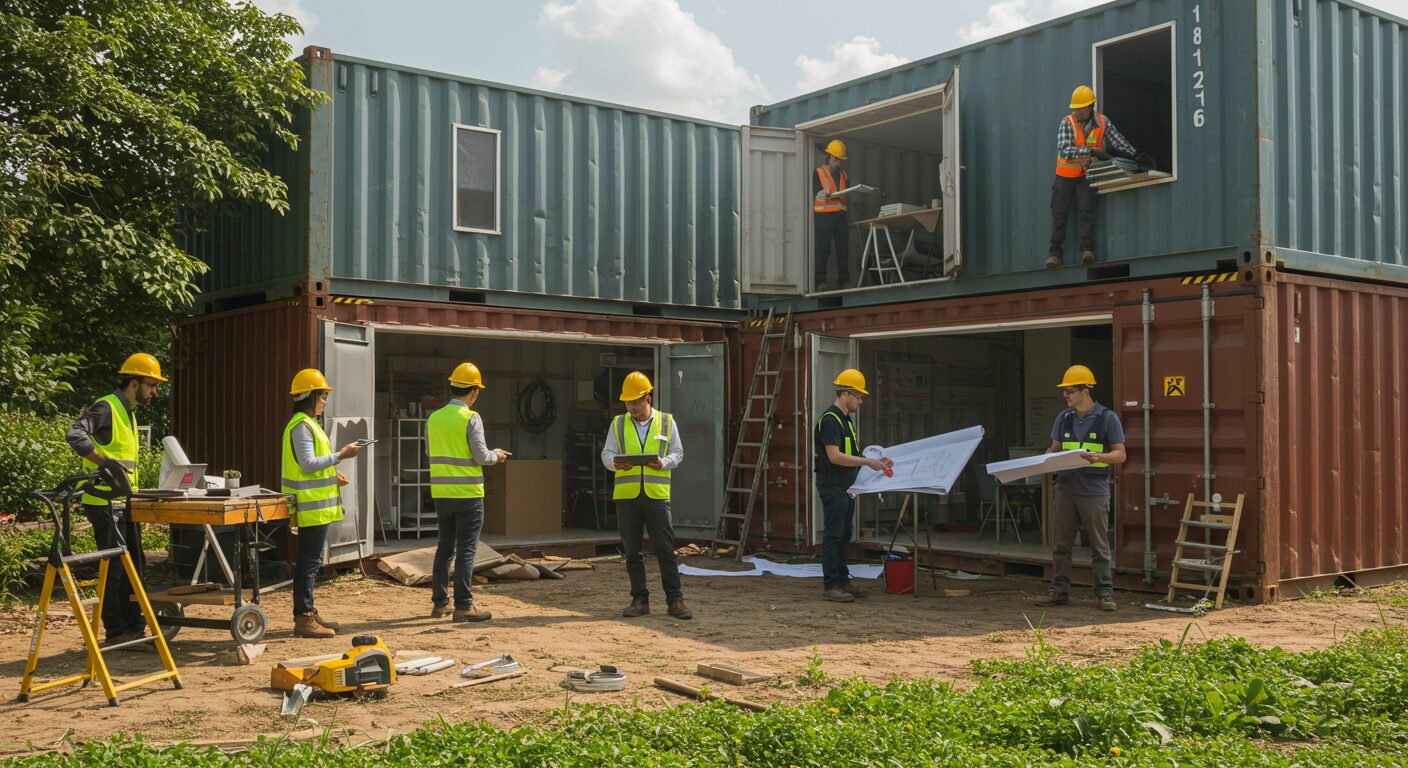
The Hidden Costs of “Cheap” Cargo Containers Nobody Warns You About
When you’re shopping for cheap cargo containers in Texas, the sticker price is just the beginning of the story. Most buyers focus solely on finding the lowest upfront cost, only to discover unexpected expenses that can double or even triple their initial investment. Understanding the true cost of ownership before you commit can save you thousands of dollars and countless headaches down the road.
The container industry has exploded in Texas over the past decade, with everyone from homeowners to commercial developers jumping on the trend. But here’s what most sellers won’t tell you upfront: the advertised price rarely reflects what you’ll actually pay. Hidden delivery fees, site preparation costs, and necessary modifications can turn that bargain container into an expensive lesson. Let’s break down what you really need to know before signing on the dotted line.
Why That Low Price Tag Isn’t What It Seems
Walk into any container yard in Houston or Dallas, and you’ll see rows of units with attractive price tags. A 20-foot container might be listed at $1,800, and a 40-footer at $3,200. Looks like a steal, right? The problem is that price assumes you’re picking it up yourself with appropriate equipment and dropping it on a perfectly level, accessible site.
Delivery charges alone can add $300 to $800 depending on your location and how far you are from the nearest port or depot. If you’re in rural Texas, expect to pay on the higher end. The delivery driver needs a clear path with overhead clearance of at least 15 feet and enough space to maneuver a tilt-bed truck. Miss any of these requirements, and you’re looking at additional crane fees that start around $500.
Site preparation is another cost that catches buyers off guard. Containers need a level foundation to prevent structural issues and door problems. A gravel pad might run $200 to $400 for a small container, while concrete piers or a full slab can cost $1,000 or more. Skip this step, and you’ll deal with rust, drainage issues, and doors that won’t close properly within the first year.
Then there’s the condition factor. That ultra-low price usually means you’re getting a container that’s seen 10-15 years of ocean service. Expect dents, rust patches, and possibly some holes that need welding. A truly cargo-worthy unit costs more upfront but saves you from immediate repair expenses. Companies like Cheap Cargo Containers in Texas have built their reputation on transparent pricing that accounts for these realities, helping customers understand the full picture before they buy.
The Modification Trap That Drains Your Budget
Most people don’t buy containers just to look at them. You want windows, doors, ventilation, insulation, or electrical work. This is where costs spiral quickly if you’re not careful. A single window cutout and installation runs $500 to $800. A standard walk-in door? Add another $800 to $1,200. Need HVAC? You’re looking at $2,000 minimum for a basic system that can handle Texas heat.
The mistake many buyers make is purchasing the cheapest container they can find, then discovering their modification costs exceed the container’s price. A smarter approach is buying a slightly better unit that requires fewer repairs, or working with a supplier who can handle modifications before delivery. This eliminates the hassle of finding separate contractors and often costs less overall.
Insulation is particularly tricky in Texas. Without it, your container becomes an oven in summer and an icebox in winter. Spray foam insulation for a 20-foot container costs $1,500 to $2,500. Cheaper alternatives like rigid foam boards save money upfront but provide less temperature control and can harbor moisture problems.
Electrical work requires permits in most Texas municipalities, adding another layer of cost and complexity. A basic electrical setup with outlets and lighting runs $800 to $1,500 if you hire a licensed electrician. Some buyers try the DIY route to save money, but this can create insurance and resale issues down the line. Choosing the right container for your specific needs from the start helps you avoid over-modifying a unit that wasn’t suitable to begin with.
Permit Problems That Cost Time and Money
Here’s something most container sellers conveniently forget to mention: you might need permits just to place a container on your property. Texas regulations vary wildly by county and city. Houston has different rules than Austin, and rural counties often have their own requirements.
Some areas classify containers as temporary structures, others as permanent buildings. This distinction matters because it affects permitting costs, which can range from $50 to $500 or more. Certain neighborhoods with homeowner associations ban containers entirely or require them to be hidden from street view, forcing you into expensive screening or landscaping.
Commercial use adds another layer of complexity. If you’re planning to use containers for a business, expect stricter building codes, fire safety requirements, and possibly commercial zoning permits. One business owner in San Antonio learned this the hard way, spending $3,000 on permits and modifications after the city flagged their unpermitted container office.
The smart move is checking local regulations before you buy. Call your city’s planning department and ask specifically about shipping containers. Get everything in writing. Some buyers have had to remove containers entirely because they didn’t do this homework upfront, losing their initial investment completely.
Long-Term Ownership Costs Nobody Talks About
The expenses don’t stop once your container is delivered and set up. Maintenance is an ongoing reality, especially in Texas weather. Coastal areas deal with salt air that accelerates rust. Inland regions face intense UV exposure that breaks down paint and seals. Expect to repaint every 3-5 years at a cost of $300 to $600 per container.
Rust is the silent killer of container longevity. Small rust spots spread quickly if ignored. Treating rust properly requires grinding, priming, and painting, which costs around $100 per spot if you hire someone. Let it go too long, and you’re looking at structural repairs or replacement panels that run into thousands.
Security is another consideration. While containers are inherently secure, the standard lock boxes can be cut off with bolt cutters in under a minute. Upgrading to high-security locks, installing alarm systems, or adding motion-sensor lighting adds $200 to $1,000 depending on your security needs.
Insurance costs vary based on how you’re using the container. If it’s just storage on your property, your homeowner’s policy might cover it. Commercial use requires separate coverage that can run $300 to $800 annually. Some insurance companies won’t cover modified containers at all, forcing you into specialty policies with higher premiums.
Property taxes are another potential cost. Some Texas counties assess containers as permanent structures, adding them to your property’s taxable value. This might only be $50 to $100 annually, but it’s another expense to factor into your budget. Maximizing your budget means accounting for these ongoing costs from day one.
The container market in Texas is competitive, which works in your favor if you know what questions to ask. Don’t just shop on price alone. Ask about delivery costs upfront, get clarity on the container’s condition and history, and understand what modifications you’ll realistically need. A container that costs $500 more initially but arrives in better condition and requires fewer repairs is the actual bargain. Working with established suppliers who’ve been serving Texas for years means you’re getting honest assessments rather than sales pitches designed to close a quick deal.
Frequently Asked Questions About Cheap Cargo Containers
What’s the average price for a cheap cargo container in Texas?
In Texas, you can typically find used 20-foot cargo containers starting around $1,500 to $2,500, while 40-foot containers range from $2,500 to $4,000 depending on condition and location. New containers cost more, but used “one-trip” containers offer a great middle ground with minimal wear at competitive prices. Prices can vary based on your specific city, with major hubs like Houston, Dallas, and San Antonio often having better availability and pricing due to higher port traffic.
Are cheap cargo containers in good enough condition for storage or building projects?
Absolutely! Most affordable cargo containers are retired shipping containers that are still structurally sound and weather-tight, making them perfect for storage, workshops, or conversion projects. Even containers with cosmetic issues like surface rust or dents typically maintain their integrity and can be easily refurbished. Before purchasing, always inspect for major rust-through, structural damage, and ensure doors seal properly to keep your belongings protected from Texas weather.
Do I need a permit to place a cargo container on my Texas property?
Permit requirements vary significantly by city and county across Texas, so you’ll need to check with your local building department before placing a container. Many rural areas have minimal restrictions, while cities like Austin, Houston, and Dallas may require permits, especially if you’re using the container as a permanent structure or dwelling. Some HOAs also have restrictions, so it’s important to verify all regulations before purchasing to avoid potential fines or having to relocate your container.
Can cargo containers withstand Texas heat and severe weather?
Cargo containers are built to endure extreme conditions during ocean transport, making them well-suited for Texas weather including intense heat, heavy rain, and strong winds. The steel construction provides excellent durability, though containers can get very hot inside during summer months—adding insulation and ventilation makes them much more comfortable for workspace or living conversions. They’re also naturally resistant to the high winds common in Texas storms, and their sealed design protects contents from flooding when properly elevated.
What’s the most affordable way to get a cargo container delivered in Texas?
The cheapest delivery option is usually to pick up the container yourself if you have access to appropriate equipment, though most people opt for professional delivery which typically costs $150 to $500 depending on distance from the supplier. Buying from suppliers located near major Texas ports or rail yards generally reduces transportation costs significantly. To save money, consider purchasing during slower business periods, buying multiple containers at once for volume discounts, or choosing a delivery location with easy access to avoid additional fees for difficult placements.
Leave a Reply